How Fast Can You Get Sanitation Onto a Disaster Site?
Speed depends on access, not paperwork. If a street is clear and there's room for a delivery vehicle, emergency porta potty rental can often be arranged same-day in Chino. What slows things down is debris blocking the drop point or a driveway that got washed out. Roll-off trucks need about 60 feet of straight clearance behind the unit to back in safely, and that number does not change because it's an emergency. If your site is tighter than that, tell us before the truck rolls, not after.
Disaster response usually means more than toilets. A temporary power pole can run pumps and lighting when the grid is down, and a light tower rental keeps a staging area workable after dark. Crews sleeping onsite or working double shifts need a place to wash up, and handwashing station rental units solve that without waiting on restored plumbing. OSHA 1926.51(a)(1) requires an adequate supply of potable water at any place of employment, disaster recovery sites included, and that rule doesn't pause for a storm.
If the event involved flooding near a septic system, don't wait to check it. A backed-up tank under standing water is a bigger problem than a slow one. Septic pumping service can get ahead of an overflow, and if the tank needs a full clean rather than just a pump-out, septic tank cleaning covers that. For sites where the sewer connection itself is unusable for weeks, a holding tank rental bridges the gap.
What Sanitation Setup Does a Disaster Site Actually Need?
It depends on headcount and how long crews will be there. For any workforce doing recovery or rebuild work, OSHA 1926.51(c)(1) sets the baseline: one toilet facility for 20 workers or fewer, then one toilet seat and one urinal per 40 workers as the crew grows past that, dropping to one per 50 once you're at 200 or more. That's the number to plan against, not a guess. Our how many porta potties do I need guide walks through the math for mixed crew sizes.
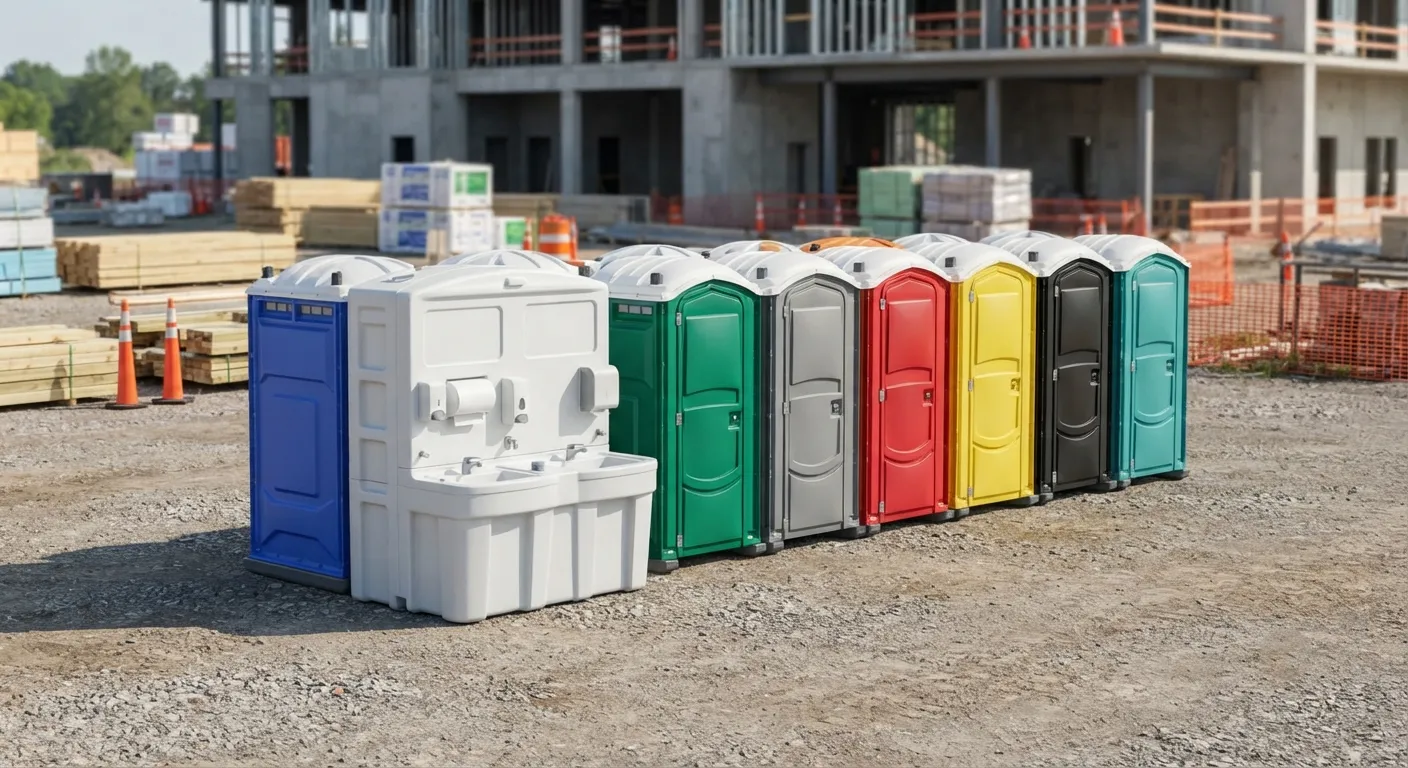
A standard porta potty rental runs a 60 to 70 gallon holding tank and stands about 92 inches tall on a 44 by 48 inch footprint, which matters when you're placing units on cracked pavement or uneven ground after a storm. If FEMA or county inspectors are onsite, or if displaced residents will use the units, at least one accessible unit is required under ADA Standards 213.2 whenever units are clustered, and a deluxe flushable porta potty is worth considering for command posts or multi-week deployments. An ADA accessible porta potty needs a 60 inch turning circle per ADA 304.3.1, so leave room around it, not just in front of it.
Debris removal runs alongside sanitation on most disaster jobs. A roll-off dumpster rental clears storm debris and gutted materials, and if the volume is heavy, the 30 yard dumpster rental size handles most residential-scale cleanup. Know what's going in it first: what cannot go in a dumpster covers hazardous material that recovery crews often hit without expecting it.
Where Should Units Go on a Damaged or Blocked Site?
Placement matters more after a disaster than on a normal jobsite, because access routes change fast. Keep a 36 inch clear path to any accessible unit, per ADA Standards 403.5.1, and make sure the door itself clears 32 inches per ADA 404.2.3, since debris piles have a way of narrowing both without anyone noticing. Our porta potty placement guide covers ground stability and slope, which becomes more relevant when a site has standing water or soft, saturated soil nearby.
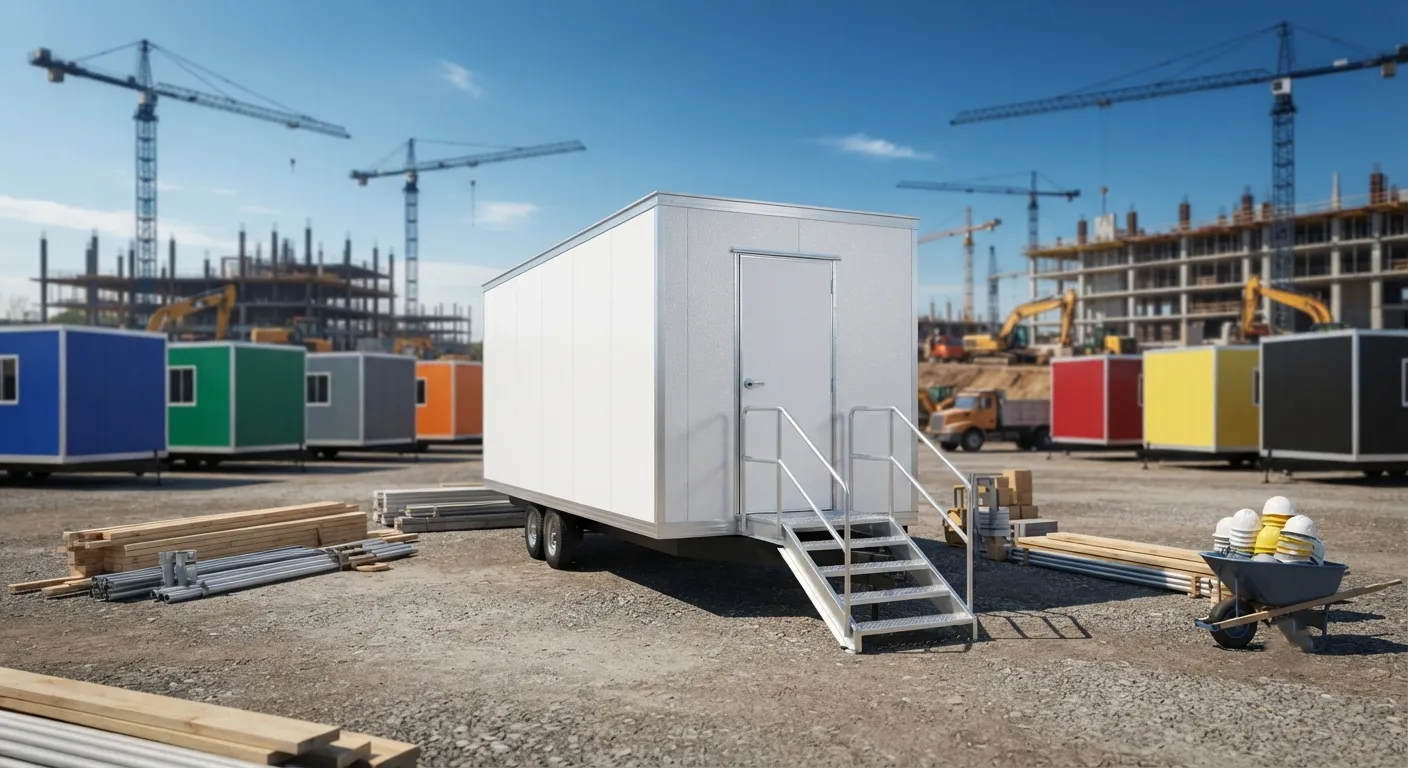
If the recovery site needs to be secured overnight against looting or unauthorized entry, temporary fence rental can go up alongside the sanitation units, and crowd control barrier rental works for keeping displaced residents or media at a safe distance from an active work zone. For crews staying onsite for extended stretches, a storage container rental secures tools and salvaged belongings, and a restroom trailer rental gives a longer-term crew something closer to normal than a standard unit. Chino sites near Eastvale, 5.9 miles east, or Upland, 10.4 miles north, fall inside our normal response radius, so cross-jurisdiction deployments during a regional event aren't a problem. Check porta potty rental cost for standard pricing once the emergency phase settles into a longer cleanup.
How quickly can a unit be delivered after a disaster?
Same-day or next-day delivery is common in Chino once the drop site is accessible. The limiting factor is almost always clearance, not stock. If a road is blocked or the ground is unstable, delivery gets pushed until the truck can safely reach the spot.
Do disaster relief sites need ADA-accessible units?
Yes, if units are clustered for public or worker use. ADA Standards 213.2 requires at least one accessible unit whenever portable toilets are grouped together, with no exception for emergency conditions. Plan for it from the first delivery rather than adding it later.
Can you supply water and handwashing without power onsite?
Yes. Handwashing stations don't need electrical hookup, and OSHA 1926.51(a)(1) requires potable water at any active worksite regardless of grid status. A portable sink rental unit works fully self-contained for crews without restored utilities.
What if the septic system flooded or backed up?
Get it inspected before it overflows further. Standing water around a tank hides pressure buildup, and a pump-out now is cheaper than a sewage cleanup later. Septic tank warning signs lists what to check before calling it in.
How long can disaster relief rentals stay onsite?
As long as recovery takes. Many disaster deployments run weeks, not days, and monthly terms apply once the initial emergency response phase ends. Ask about extending an existing order rather than starting a new one, since it keeps billing simpler.
Next step
Get a delivery date
Tell us the address, the dates and the headcount. We size the order and confirm the route.