
How many restrooms does a county fair need?
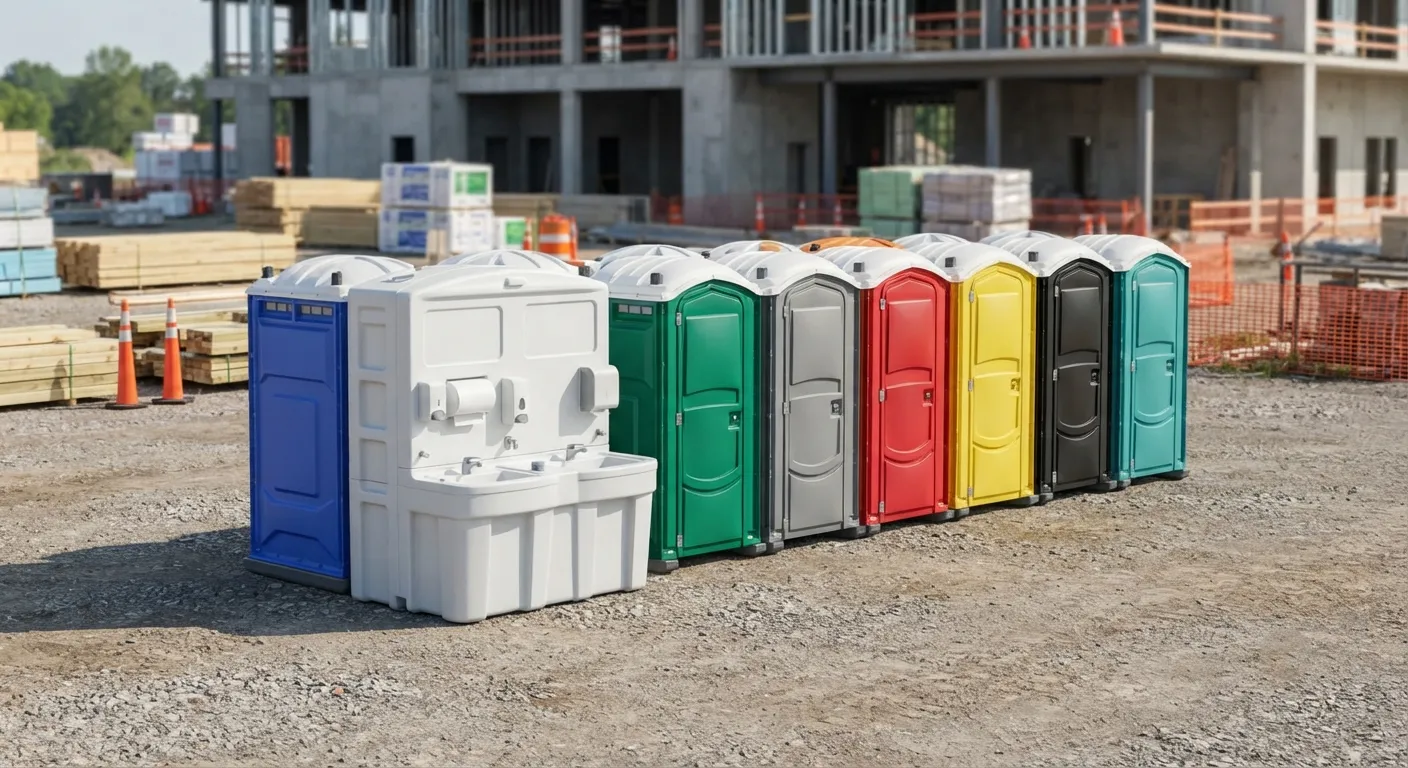
Start with attendance, then split it by hour, not by day. A fair pulling 3,000 people across an 8-hour run needs a different count than the same 3,000 spread over a weekend. We size most Chino fairground jobs using standard porta potty rental units as the base, adding deluxe flushable units near vendor rows and grandstands where lines move fast and patience runs short.
OSHA 1926.51(c) sets construction-site ratios, not fair crowds, but it is still the reference most vendors and city staff know, and it is a useful floor for staffing tents and vendor crews working the fairgrounds all day. For public attendees, plan tighter. A single line backing up past a food booth costs you goodwill fast, and it is cheaper to add three more standard units than to lose a vendor over it.
ADA Standards section 213.2 requires that where single-user portable units are clustered, at least 5 percent be accessible, and never fewer than one. On a fairground layout with twelve units at the main gate, that means at least one ADA unit in that cluster, with a firm, stable surface underneath it per ADA Standards section 302.1. We check ground conditions at every Chino site walk before delivery, because gravel and turf both shift once foot traffic starts.
Handwashing matters just as much as toilet count. 29 CFR 1910.141(d)(2) requires soap and towels or a hand-drying device at washing stations, not sanitizer alone, so we pair handwashing station rentals or portable sink rentals with restroom clusters near food vendors.
Where should restrooms go on a fairground layout?
Restrooms belong near the flow, not at the edges. Place clusters at gate entries, near grandstands, and along the vendor midway, spaced so no patron walks more than a few hundred feet. Our porta potty placement guide covers ground stability, drainage direction and clearance for pump trucks, all of which matter more at fairgrounds than at a typical job site because service trucks need repeat access all day.
ADA Standards section 403.5.1 sets a 36 inch minimum clear width for accessible routes, and section 405.2 caps ramp slope at 1:12, both relevant if any unit sits on a platform or near uneven grading. A 60 inch turning circle, per ADA Standards section 304.3.1, needs to fit in front of every accessible unit's door, which itself must clear 32 inches per section 404.2.3. We map these clearances during the same site walk where we check ground surface.
For larger fairs, a restroom trailer rental at a central plaza point beats scattering only single units. An 8 stall restroom trailer handles heavy midday surges better than eight standalone units spread thin, and it gives fair staff one service point instead of a dozen. Chino events near larger venues sometimes combine trailers with standard clusters at the far gates, splitting flow instead of funneling everyone to one spot.
Service frequency also shapes placement. ANSI/PSAI Z4.3 sets a baseline of one service visit per week for up to 10 users over a 40 hour week, but a single fair day pulling thousands needs same-day servicing scheduled into the route, not a weekly default. We build that into every Chino fairground quote.
What does a county fair restroom package cost?
Multi-day fairs price differently than a single afternoon, and unit mix drives most of the swing. Here is what typical fairground rentals run:
| unit | duration | typical price |
|---|---|---|
| standard | event | $400 |
| ada | day | $230 |
| deluxe | day | $300 |
| trailer | event | $3,500 |
| service_fee | weekend | $700 |
Event-day standard pricing runs $200 to $800 depending on cluster size and service frequency. A weekend fair adds a service fee band of $400 to $1,200 for extra pump-outs between gate openings. Check our porta potty rental cost page for how daily, weekly and event pricing compares, and restroom trailer rental cost if a trailer fits your layout better than standalone units. Chino fair organizers usually request a quote once headcount and gate hours are set, since both move the unit count more than distance does.
Eastvale sits 5.9 miles east and Upland 10.4 miles north, both within normal delivery range for Chino fairground work, so trucks can restock supply runs mid-event without a long haul back to base.
How far in advance should I book fair restrooms?
Book as soon as gate dates and expected attendance are set, ideally weeks out. Fairgrounds book trucks and trailers early for peak season, and late requests limit unit selection. Use request a quote once headcount estimates firm up.
Do fairgrounds need ADA accessible units?
Yes. ADA Standards section 213.2 requires at least 5 percent of clustered units be accessible, never fewer than one per cluster. See ADA restroom requirements for layout details specific to public events.
Can Chino Porta Pros service units mid-event?
Yes, multi-day fairs get scheduled service visits built into the quote, not just delivery and pickup. Same-day pump-outs are available for high-traffic gate clusters when attendance spikes past initial estimates.
What is the difference between standard and deluxe units for a fair?
Standard units cover general foot traffic at a lower cost. Deluxe flushable units, detailed on our deluxe flushable porta potty page, suit vendor rows and grandstand areas where comfort expectations run higher.
Do we need handwashing stations separate from restrooms?
Yes, especially near food vendors. 29 CFR 1910.141(d)(2) requires soap and towels, not sanitizer alone, so pair handwashing stations with every food-adjacent restroom cluster.
Next step
Get a delivery date
Tell us the address, the dates and the headcount. We size the order and confirm the route.